
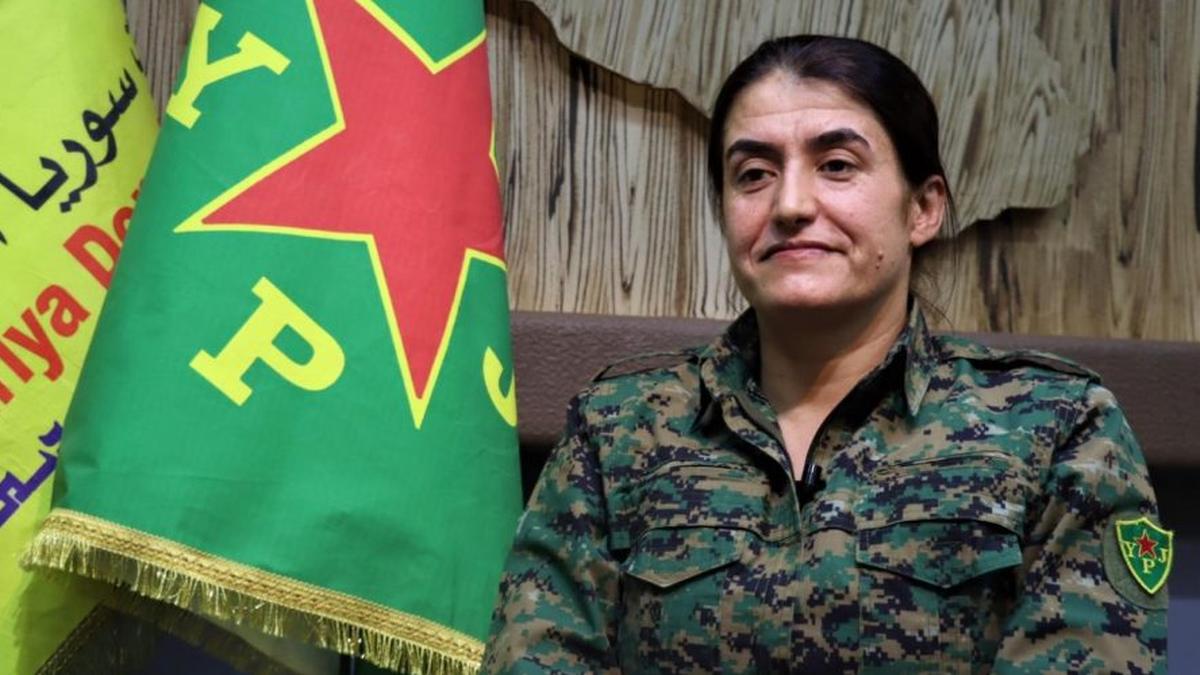
When the interim government took power in Syria after the collapse of the regime of President Bashar al-Assad fell in December 2024, many hoped it would bring an end to bloodshed and open a new path towards reconstruction and democratic reforms. But the mistakes made by the new rulers of Syria have considerably increased the violence and instability in all parts of the country, says Rohilat Afrin, the Commander-in-Chief of the Women’s Defence Units (YPJ), a Kurdish armed group, and member of the Syrian Democratic Forces (SDF) General Command. The YPJ and the YPG (People’s Protection Units) are the main constituents of the SDF, which, with support from the U.S., played a pivotal role in the battle against the Islamic State (IS) in Syria from 2014 onwards. In recent months, fighting broke out between the Syrian government troops and the SDF, which led to a fragile ceasefire on January 10. In this written interview with The Hindu, Ms. Afrin talks about the fighting in North and East Syria, prospects for peace and stability in the country and the future of Kurdish autonomy. Edited excerpts:
 Can you describe the current dynamics of the clashes between Kurdish forces and Syrian government troops, and what are the primary causes of this escalation?
Solimo 2000/1000 Watts Room Heater
Adjustable thermostat • ISI certified • Ideal for small to medium rooms
📦 Featured Product Recommendation
Below is a top-recommended product you can buy on Amazon — support us by using the link below (we earn a commission at no extra cost to you).
🔗 Buy on Amazon* Shop with confidence — Amazon Affiliate Link

RR Signature WARMAXX Room Heater
Dual heating mode • Overheat protection • 5-level safety • 2 year warranty
View on AmazonBorosil 2000W Novus Electric Fan Heater
Made in India • Variable temperature • Horizontal & vertical placement
See Details on Amazon
On January 6, the territories administered by the Democratic Autonomous Administration of North and East Syria (DAANES) and defended by the Syrian Democratic Forces (SDF) came under heavy attacks. These attacks were carried out not just by forces controlled by the Syrian Interim Government (SIG). Brigades which are directly controlled by Turkey, foreign fighters of the Hayat Tahrir al-Sham (HTS) and Islamic State (IS) fighters were also part of these attacks. As the SDF and Women’s Defence Units (YPJ), we decided to pull our forces out of areas such as Tabqa, Raqqa and Deir ez-Zor in order to avoid destruction and bloodshed among the local population. The SDF, YPJ and People’s Defence Forces (YPG) defended the Kurdish-majority areas in North and East Syria with great resolve.
The city of Kobane and its surrounding areas were under a total blockade and daily attacks for several weeks. More to the East, the cities Hasakak, Qamishli and Derik remained under the protection of our forces. We remain absolutely determined to protect our people living in the Kurdish-majority areas. This is our red line. Despite several ceasefires, the above-mentioned forces carried out daily attacks. They were supported by Turkish drones which carried out reconnaissance flights and air strikes. The talks about an implementation of the March 10 memorandum-of-understanding had reached a point where both sides were close to signing a deal on January 4. Then there was intervention from outside forces and the talks broke down. Shortly after, the Syrian interim government alongside the other forces started to attack.
On January 30, a comprehensive ceasefire and timeline for the political and military integration of the DAANES with the institutions of the Syrian state was agreed upon. This includes, among many other points, the establishment of 4 brigades of the SDF in North and East Syria – including the YPJ – as part of the Syrian army, the appointment of the governor of Hasakah by the SDF and the merging of DAANES institutions with state institutions while securing the positions of civil personnel working in these institutions. This gives the peoples of Syria the chance to finally build a democratic, inclusive and peaceful country. The next month will be crucial for the first steps towards a complete integration. What will be absolutely essential for the future of our country is the drafting of a new, democratic constitution.
Does this renewed fighting put the Autonomous Administration model in North and East Syria at risk?
The last 15 years have shown clearly that the philosophy behind DAANES is an important model to consider for the peoples of Syria. The leading role of women, the peaceful coexistence of Arabs, Kurds, Armenians, Syriacs and Turkmens, the establishment of democratic institutions and the ability to defend ourselves against radical forces such as IS are an important experience for all of Syria. These recent attacks were not only aimed at territory or political structures. They were aimed at dismantling the women-led system of the DAANES. Women in North and East Syria are not merely victims of war. They are political actors, organisers, decision-makers and defenders of their society. The targeting of North and East Syria is inseparable from the attempt to erase women’s autonomy and leadership. What is under attack are the important women’s achievements themselves.
The social contract written by the peoples of North and East Syria constitutes a basis for a new, democratic constitution for our country. In recent weeks, the DAANES and the peoples of North and East Syria were faced with brutal attacks. Especially our 3 million Kurdish people were facing a serious risk of systematic violence that amounted to genocidal crimes. Yet, we know that the DAANES model is indispensable for building a democratic, decentralised and pluralistic Syria for all its ethnic and religious components, for its women and youth. Today in Damascus, we are faced with an approach to governance that advocates a homogeneous nationalist Syrian identity, excessive centralisation of power, and violence rather than dialogue. Encouraged by certain external powers, the current authorities tend to pursue a military solution rather than dialogue.
How does this conflict shape the broader prospects for a negotiated political settlement in Syria? Is there still space for a federal or decentralized solution?
In 2011, people from all parts of Syria took to the streets to demand democracy and freedom. They were all united in their hopes and dreams. Today, the demands of our peoples are very much alive. We, the people of Syria, have suffered extremely from outside interventions and war in the last years. Therefore, all sections of Syria’s society wish for an end of the suffering and the start of a new, inclusive Syria. Those in power today need to listen to the demands of the people. There is no going back to the time before 2011. A centralised, undemocratic Syria is not what the people wish for. The future of our country lies in a democratic, decentralised and pluralistic system in which everybody finds their place. Our country is too diverse to be governed with a centralised and homogeneous mindset. In the last year, we have seen that this mindset only leads to increasing violence, mistrust and instability. DAANES is ready to play their role in the building of a democratic Syria. And the SDF, YPG and YPJ are ready to contribute to the defense of Syria against threats from the outside and inside. We have valuable capabilities to contribute, especially in the fight against the Islamic State. Damascus needs to reconsider its current approach and show the political will to find a political solution. Then the process of democratic integration in Syria can succeed.
Will the tensions between the Syrian Kurds and Damascus have any impact on the ongoing peace process between the Kurds and the Turkish government?
Our people in Rojava and representatives from North and East Syria have repeatedly welcomed the talks between the Kurds in Turkey and Turkey’s government. We think that a solution of the Kurdish question in Turkey can make an important contribution to democracy and stability in the broader region. The Kurdish question is a huge wound for all of West Asia. It needs be be healed. The Kurdish people have developed a strong sense of national unity and follow the developments in the different countries closely. Decreasing the tensions in Syria and finding a political solution for the Kurds in our country to become equal citizens in a democratic Syria would make an important contribution to stabilising the broader region.
How would you assess the overall security situation in Syria right now, especially in areas previously considered relatively stable?
Beyond the military dimension, civilians are paying a devastating price. Access to electricity, water, food and healthcare is dwindling due to sieges and attacks on the cities and villages of North and East Syria. Women and children live in constant fear, unable to access basic healthcare and deprived of education. Winter conditions have turned the siege into a deadly weapon, especially for displaced families.
When the Syrian Interim Government took over power in December 2024, all of Syria hoped for an end of the bloodshed, the reconstruction of our country and the establishment of a democratic system. Unfortunately, many mistakes by the new rulers have considerably increased the violence and instability in all parts of Syria. Our Alawite people were subjected to a genocide and continue to face daily systematic violence. Our Druze people have seen many of their villages destroyed and continue to defend themselves against regular attacks. The women of Syria have experienced a huge setback and suffer brutal violence every day. And now, the attacks by the SIG, Turkey-controlled groups, HTS and IS turned the North and East of Syria into a battlefield. Women were deliberately targeted as part of this war. Abduction, sexual violence and intimidation are used to disband communities and forcibly displace people. This is not accidental or collateral damage. This is a deliberate strategy aimed at eliminating women from public, social and political life.
There are reports of ISIS cells becoming more active again. Do you see a resurgence of ISIS in Syria?
IS is not only regaining strength, it receives active support from internal and external actors to reorganise, strengthen its ranks and carry out attacks against the peoples of Syria, especially our Kurdish people. The failed policy of Damascus has created huge security gaps that the IS has benefited from. The IS today has active cells in all parts of the country, including the capital Damascus. Yet, instead of tackling this serious security threat and seeking the cooperation of the SDF, the YPG and the YPJ, Damascus decided to wage war on the very forces that defeated the IS. It was us, the Kurds and other peoples of North and East Syria, who gave more than 12,000 of our people in the fight against the IS.
And now? Forces controlled by the SIG just released around 2000 IS prisoners after they attacked a prison in the city Shaddadi. Because of these attacks, our forces had to pull back. The same thing happened in the al-Hol camp. All this shows clearly that the IS today has prominent supporters both in and outside of Syria. This constitutes a serious danger for Syria, West Asia and the rest of the world.
Can you elaborate on your fight against ISIS from 2014 onwards?
After the weakening of the central government in 2011, our people decided to govern their villages and cities in North and East Syria by themselves. They did so together with our Arab, Armenian, Syriac and Turkmen peoples of North and East Syria. Yet, our democratic achievements quickly came under heavy attacks. Al-Nusra [al-Qaeda] forces attacked us in 2012 and 2013. Then came the Islamic State in 2014. And since 2016, Turkey’s army has intervened directly and occupied large parts of North Syria. This includes ancient Kurdish areas such as Efrin and Serekaniye which were occupied by Turkey in 2018 and 2019. Self-defence is a natural right of all societies. We therefore chose to defend ourselves against the fascist project of the IS. And we paid a high price for that. More than 12,000 got martyred and over 25,000 were wounded. Now that the IS is again gaining strength, we are afraid that it will not only reorganise itself in our region; the IS will seek to attack countries in Europe, Africa and South Asia. Therefore, the international community needs to support a political solution between DAANES and the Syrian Interim Government in order to prevent a resurgence of the IS in Syria.