
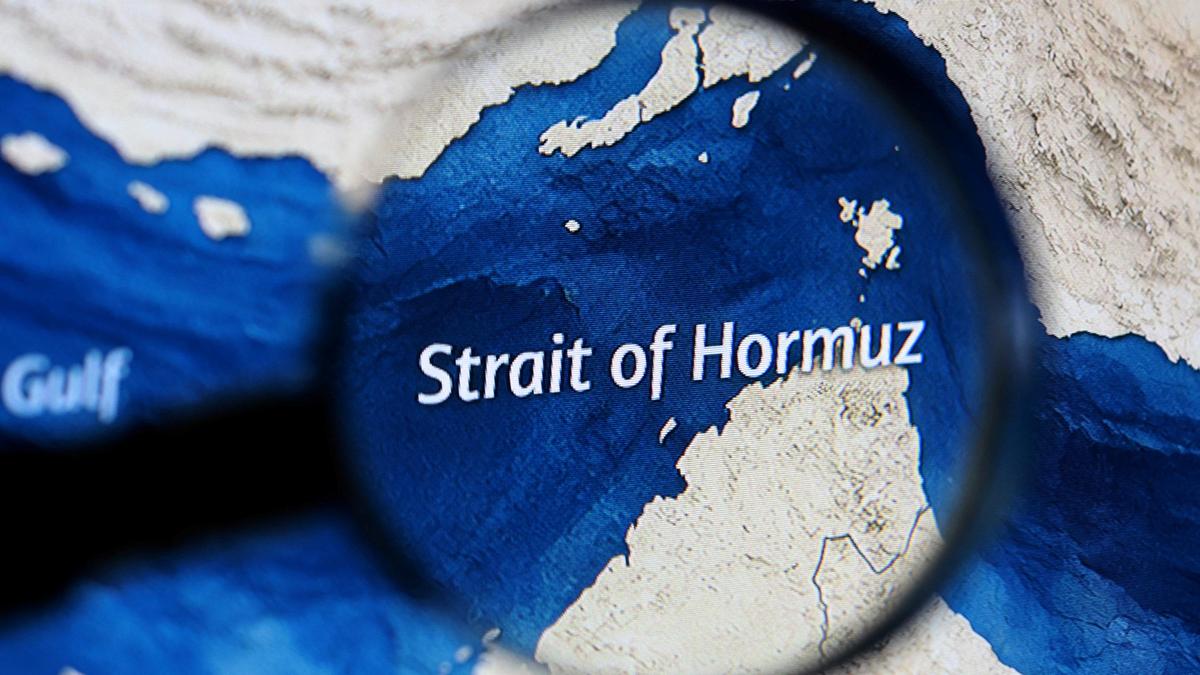

A map showing the Strait of Hormuz is seen in this illustration taken March 23, 2026.
| Photo Credit: Reuters
Iran’s Parliament is working on a bill to formalise the fees it is reportedly charging on some ships transiting through the Strait of Hormuz, local media reported.
Solimo 2000/1000 Watts Room Heater
Adjustable thermostat • ISI certified • Ideal for small to medium rooms
📦 Featured Product Recommendation
Below is a top-recommended product you can buy on Amazon — support us by using the link below (we earn a commission at no extra cost to you).
🔗 Buy on Amazon* Shop with confidence — Amazon Affiliate Link

RR Signature WARMAXX Room Heater
Dual heating mode • Overheat protection • 5-level safety • 2 year warranty
View on AmazonBorosil 2000W Novus Electric Fan Heater
Made in India • Variable temperature • Horizontal & vertical placement
See Details on AmazonThe Fars and Tasnim news agencies, both close to Iran’s Revolutionary Guard, quoted lawmaker Mohammadreza Rezaei Kouchi as saying that “Parliament is pursuing a plan to formally codify Iran’s sovereignty, control and oversight over the Strait of Hormuz while also creating a source of revenue through the collection of fees”.
Also read: West Asia war updates on March 26, 2026
“This is entirely natural; just as goods pay transit fees when passing through other corridors, the Strait of Hormuz is also a corridor,” he reportedly said.
“We provide its security, and it is natural that ships and oil tankers should pay such fees.” The Strait of Hormuz, the narrow mouth of the Persian Gulf, is considered an international waterway open to all shipping.
Imposing fees would end that and likely be strongly opposed by the Gulf Arab states, the United States and others.
An Emirati oil executive calls Iran’s chokehold on the Strait of Hormuz “economic terrorism”. The comment by Sultan al-Jaber, who leads the massive state-run Abu Dhabi National Oil Co., signalled the hardening rhetoric of the United Arab Emirates as the war nears its one-month mark.
“Weaponising the Strait of Hormuz is not an act of aggression against one nation,” Sultan al-Jaber said in a speech for an event hosted by the Middle East Institute in Washington.
“It is economic terrorism against every consumer, every family that depends on affordable energy and food. When Iran holds Hormuz hostage, every nation pays the ransom at the gas pump, at the grocery store and at the pharmacy. No country can be allowed to destabilise the global economy in this way. Not now. Not ever.”
Published – March 26, 2026 08:28 pm IST