
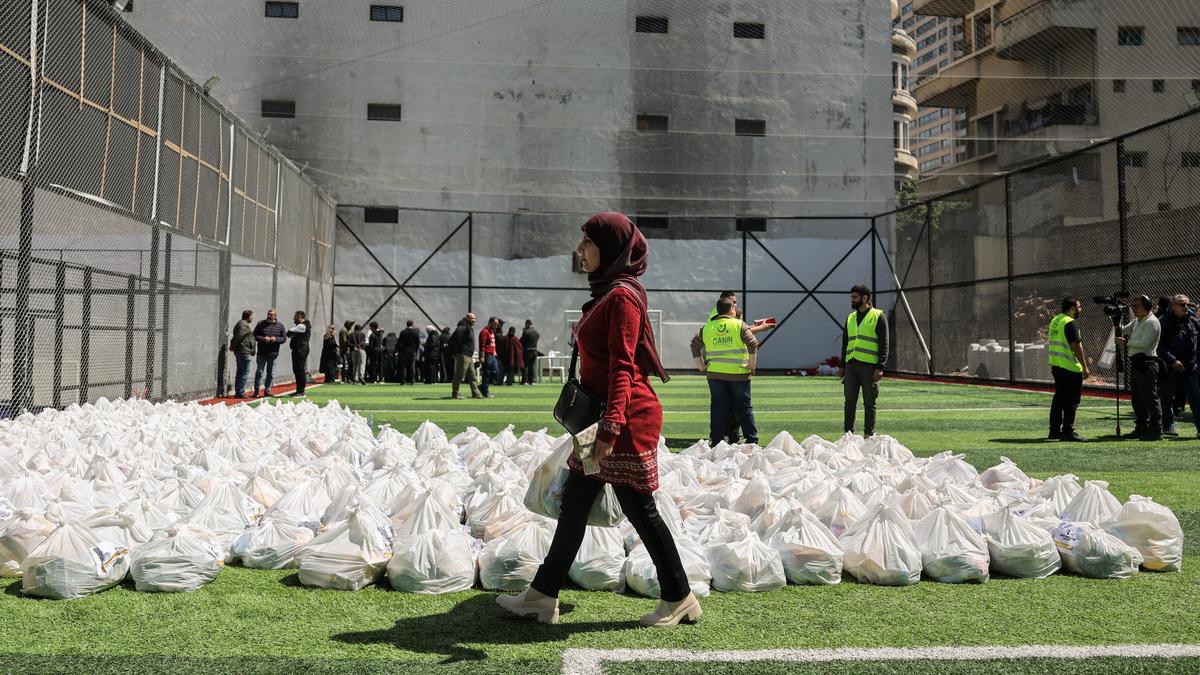

Aid groups distribute food and basic supplies to displaced families, in Bachoura neighbourhood, which was hit by an Israeli strike in the past weeks, amid escalating hostilities between Israel and Hezbollah, as the U.S.-Israeli conflict with Iran continues, in Beirut, Lebanon, on March 28, 2026.
| Photo Credit: Reuters
Not only has the conflict cut off vital shipping routes, creating a global energy crisis, it’s also disrupting supply chains for aid groups, forcing them to use costlier, more time-consuming routes.
Solimo 2000/1000 Watts Room Heater
Adjustable thermostat • ISI certified • Ideal for small to medium rooms
📦 Featured Product Recommendation
Below is a top-recommended product you can buy on Amazon — support us by using the link below (we earn a commission at no extra cost to you).
🔗 Buy on Amazon* Shop with confidence — Amazon Affiliate Link

RR Signature WARMAXX Room Heater
Dual heating mode • Overheat protection • 5-level safety • 2 year warranty
View on AmazonBorosil 2000W Novus Electric Fan Heater
Made in India • Variable temperature • Horizontal & vertical placement
See Details on Amazon
Also Read : Iran-Israel war LIVE
Key pathways such as the Strait of Hormuz have been effectively shuttered and routes from strategic hubs such as Dubai, Doha and Abu Dhabi have also been impacted. Transport costs have spiked with higher fuel and insurance rates, meaning less supplies can be delivered with the same amount of money.

The World Food Program says it has tens of thousands of metric tons of food heavily delayed in transit. The International Rescue Committee has $130,000 worth of pharmaceuticals intended for war-torn Sudan stranded in Dubai and nearly 670 boxes of therapeutic food meant for severely malnourished children in Somalia stuck in India. The UN Population Fund says it’s delayed sending equipment to 16 countries.

Steep U.S. cuts to foreign aid already had hobbled many aid groups, who say the war is exacerbating the problem.
The United Nations says this is the most significant supply chain disruption since COVID, with up to a 20% cost increase on shipments and delays as goods are rerouted. And the war is creating new emergencies, such as in Iran, and also in Lebanon where at least one million people have been displaced.

“The war on Iran and disruption to the Strait of Hormuz risk pushing humanitarian operations beyond their limits,” said Madiha Raza, associate director for public affairs and communications for Africa for the International Rescue Committee.
Even when the fighting stops, the shock to global supply chains could continue to delay lifesaving aid for months, she said.
Longer and more costly routes
The war has forced organizations to find new ways to transport goods, with some bypassing the Strait of Hormuz and the Suez Canal and rerouting vessels around Africa, adding weeks to the delivery.
Others are using a hybrid of methods, including land, sea and air, increasing costs.
Jean-Cedric Meeus, chief of global transport and logistics for UNICEF, said his agency is using a mix of land and air routes to send vaccines to Nigeria and Iran in order to get them there in time for the vaccination campaigns, but the costs have soared.

Before the war, UNICEF sent vaccines to Iran by plane directly from vendors around the world. Now it’s flying the vaccines to Turkey and driving them into Iran, which has increased costs by 20% and has added 10 days to the delivery time, he said.
Save the Children International, which would normally send supplies by ocean freight from Dubai to Port Sudan, will now have to truck the goods from Dubai through Saudi Arabia and then by barge across the Red Sea, it said. The route adds 10 days and increases costs by about 25%, at a time when over 19 million Sudanese face acute food insecurity. The delay puts more than 90 primary health care facilities across Sudan at risk of running out of essential medicines, it said.
The spike in prices also means organizations have to choose what to prioritize.
Also Read : The Strait of Hormuz crisis is testing the petrodollar system
“In the end, you sacrifice either the number of children that you serve … or you sacrifice the number of items that you can afford to buy,” said Janti Soeripto, president of Save the Children for the United States. The group said it has stockpiles in countries where it works but some of those could run out within weeks.
Rising costs are also impacting people’s ability to seek help within their countries.
Doctors Without Borders said rising fuel prices across Somalia — where some 6.5 million people are experiencing acute food insecurity — have driven up transport and food costs, making it harder for people to get care. In Nigeria, the IRC says fuel prices have surged by 50% and clinics are struggling to power equipment, such as generators and mobile health teams have scaled back operations.
Published – April 05, 2026 01:42 pm IST